Why Your Garage Door Sensors Keep Drifting in Lake Forest
Lake Forest homes built mostly in the 1980s and 90s see sensor brackets shift with frost heave and slab settling. Here's when that drift means a real problem.
If your door reverses for no reason, or the opener light blinks a pattern before it'll close, the safety sensors are probably misaligned rather than broken. That's a five-minute fix most of the time. Call a tech when you've already nudged both sensors back to face each other and the door still won't close, when the bracket itself is bent or cracked, or when the wire running to one sensor has been chewed, pinched, or corroded where it meets the slab. Lake Forest's housing stock runs from 1938 up through 2009, with most of it dating to the 1980s and 90s, so a lot of these brackets are original equipment on original mounting hardware. Once the bracket metal fatigues or the plastic housing yellows and cracks, re-aiming it buys you a week, not a season. At that point you're replacing the sensor pair, not adjusting it.
The Situation
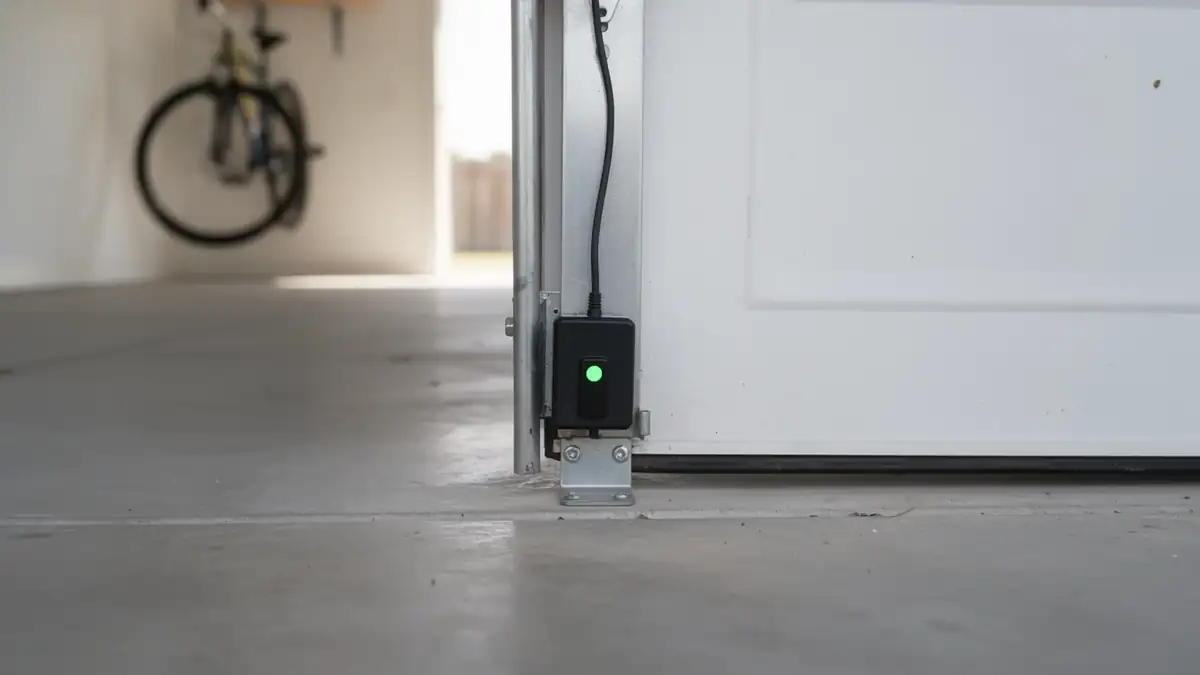
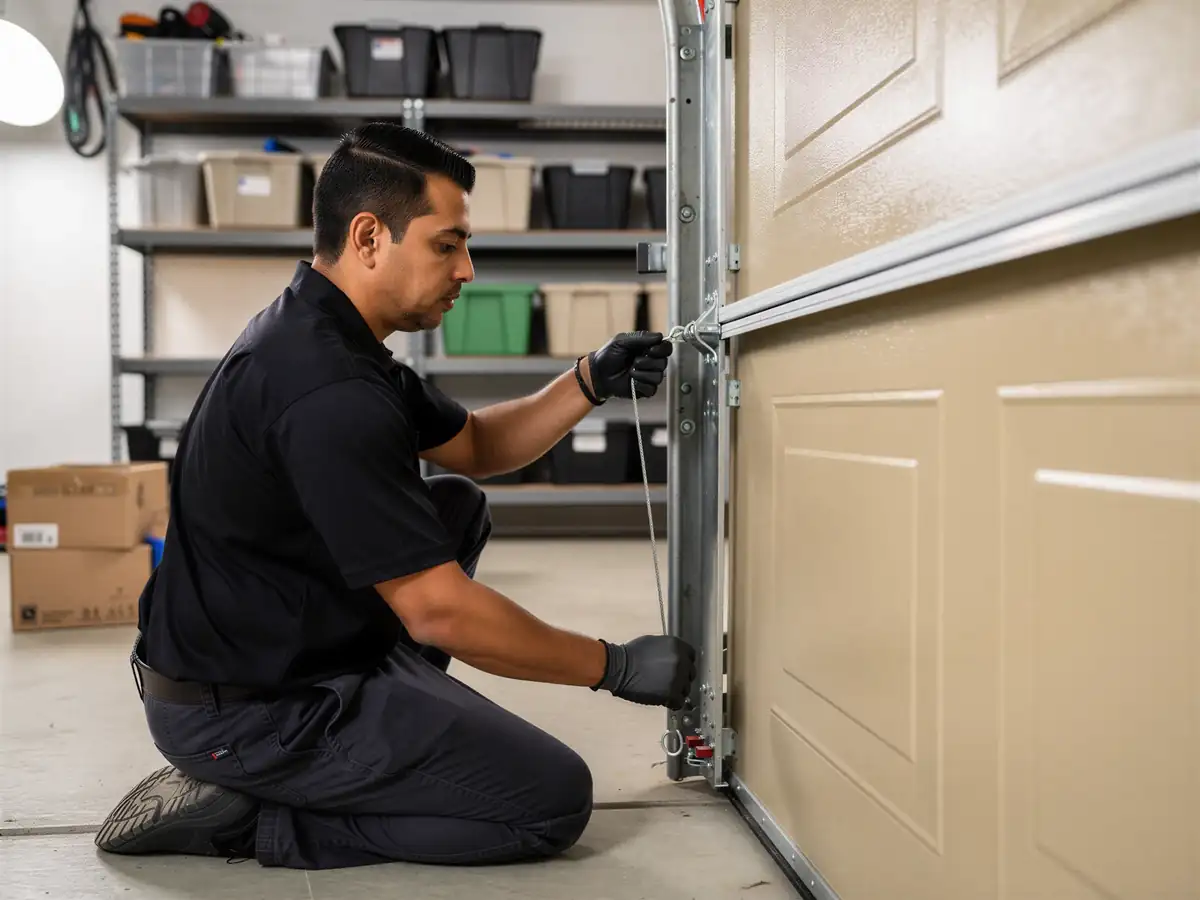
Sensors sit about six inches off the garage floor on either side of the track, and they only need to be off by a degree or two to lose the beam. In a house built in the 1980s or 90s - which describes most of the stock here - the slab has had thirty or forty years to settle unevenly, and the wood or metal jamb the bracket is screwed into has moved with it. That slow shift is enough to walk the sensor eye off center over a few seasons without anyone touching it. Newer builds in town, closer to the 2009 end of the range, see less of this because the concrete hasn't had as long to move, but even those aren't immune once a car bumper or a stored bike clips the bracket.
What Most People Get Wrong
People assume a reversing door means the opener's logic board is failing, and they start looking at replacing the whole unit. Most of the time it's a sensor off by a hair, or a spider web or dust film across one lens killing the beam strength. The other common mistake is loosening the wing nut, shoving the bracket by eye, and retightening without ever checking that both LED indicators read solid instead of flickering. A solid light on both sides means the beam is actually connecting, not just that the sensor has power. Skipping that check is how the same call comes back a week later.
What Local Conditions Do
This is a cold climate region, and that matters more for sensors than people expect. Overnight temperature swings through winter make the metal bracket and the slab it's bolted to expand and contract at different rates, and that's a slower, repeating version of the settling that already happens in a house built decades ago. Garages here also see road salt tracked in on tires, which creeps into the bracket screws and the wire terminal where it meets the sensor, corroding the connection before the alignment itself ever fails. In practice that means a sensor that worked fine in October can read flaky by February, even though nobody touched it, and it's worth a quick visual check each fall before the cold sets in for good.
Why did my sensors work fine all summer and start acting up in winter?
Temperature swings make the bracket metal and the slab underneath it expand and contract at different rates, which nudges the aim out over a season. Road salt tracked into the garage also corrodes the wire terminals at the sensor, which can mimic a misalignment even when the eyes are still pointed correctly at each other.
Is my house old enough for this to be a wiring issue instead of alignment?
Most homes in Lake Forest were built in the 1980s or 90s, so original sensor wiring and brackets are common. If you've re-aimed both sensors and the LEDs still flicker instead of holding solid, it's worth having the wire run checked for pinches or corrosion rather than just re-adjusting again.
Can I fix sensor drift myself?
Usually yes. Loosen the wing nut on each bracket, point the sensors directly at each other until both LEDs show solid rather than blinking, then retighten. If the bracket itself is bent, cracked, or the wire is damaged, that's a replacement job, not an alignment one.
Ready to get your garage door sorted?
Tell us what it’s doing and where you are in Lake Forest - we’ll take it from there.