Why wide double garage doors built during Lake Forest's 1980s-90s construction boom take wind pressure differently, and when that matters for your repair call.
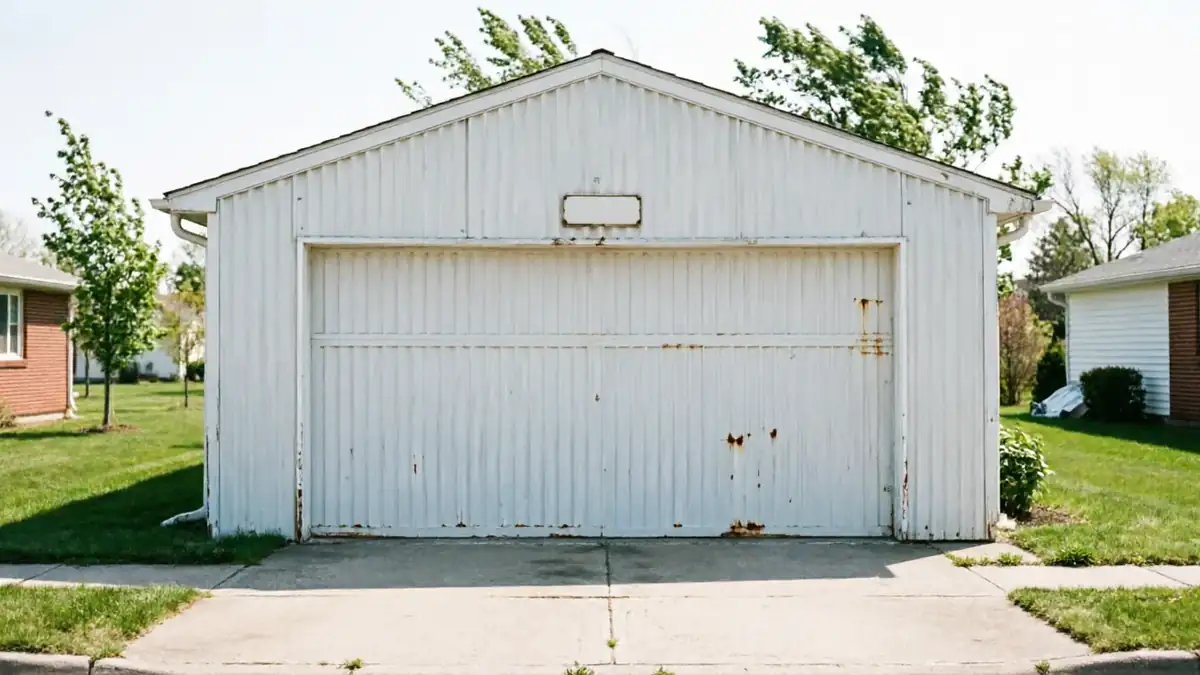
Call before the next windy day if your double-wide door (the 16-foot kind that covers two bays) has started to bow visibly in the middle when it's closed, or if you hear the panels pop and flex during a gust. A door that flexes under wind load is telling you the horizontal strut or the track bracket is already working loose. Once a wide door starts walking in its tracks during wind, the rollers wear unevenly and the next gust does more damage than the last one. If the door still sits flat and quiet in a storm, you've got time. If it's drumming against the stops or the opener strains to hold it shut, that's a same-week call, not a someday one. Houses in this area built across the 1938-2009 range carry a wide spread of door widths and track styles, so the fix depends on what's actually behind your panel, not a general rule. We'd rather look at it in person than guess over the phone, because a strut retrofit on an older single-layer door is a different job than tightening hardware on a newer insulated one.
The Situation
A lot of the housing stock here dates to the 1980s and 90s, with the overall range running 1938 to 2009 and a median build year around 1983. That matters for wide doors specifically because double-wide garages became more common as houses got bigger through that stretch, and a 16-foot door has roughly twice the surface area of a single door catching the same gust. Wind load on a garage door isn't really about the wind speed alone - it's about how much flat panel is standing in its way and how the structure behind that panel is built to resist bowing. Older single-car garages built earlier in that 1938-2009 window often have narrower doors with simpler bracing needs. Wider doors installed during the later building years need horizontal struts rated for the span, and not every door got them standard when it went in. The climate band here is cold-moderate, which means freeze-thaw cycling on hardware and seasonal wind events both come into play over a given year, not just one or the other.
What Most People Get Wrong
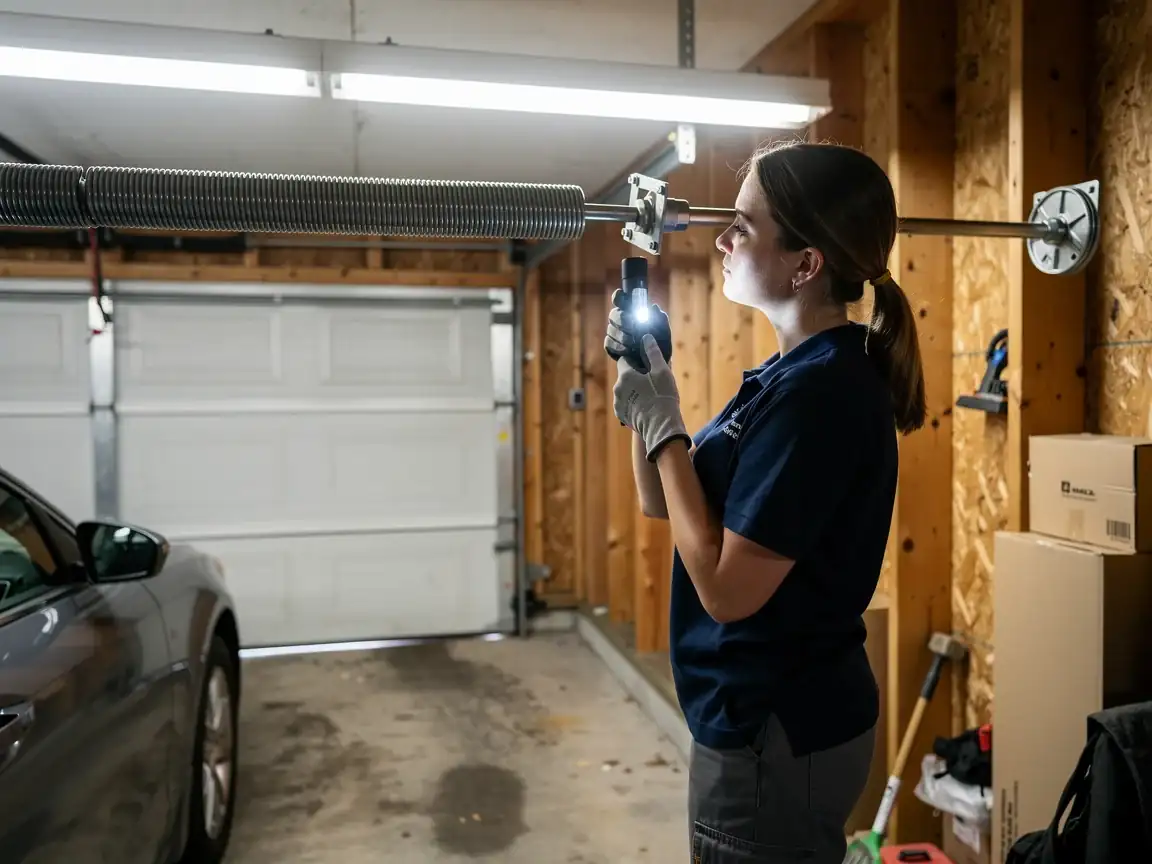
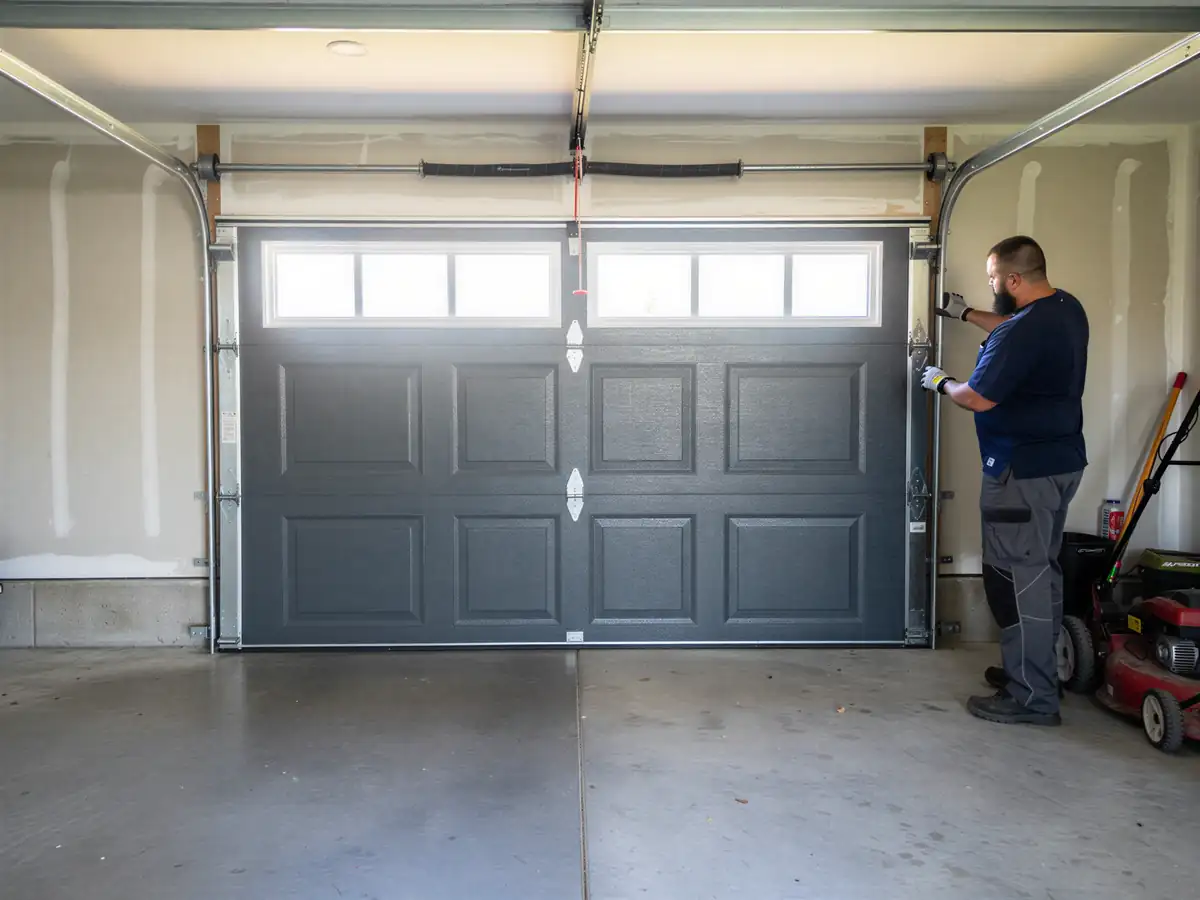
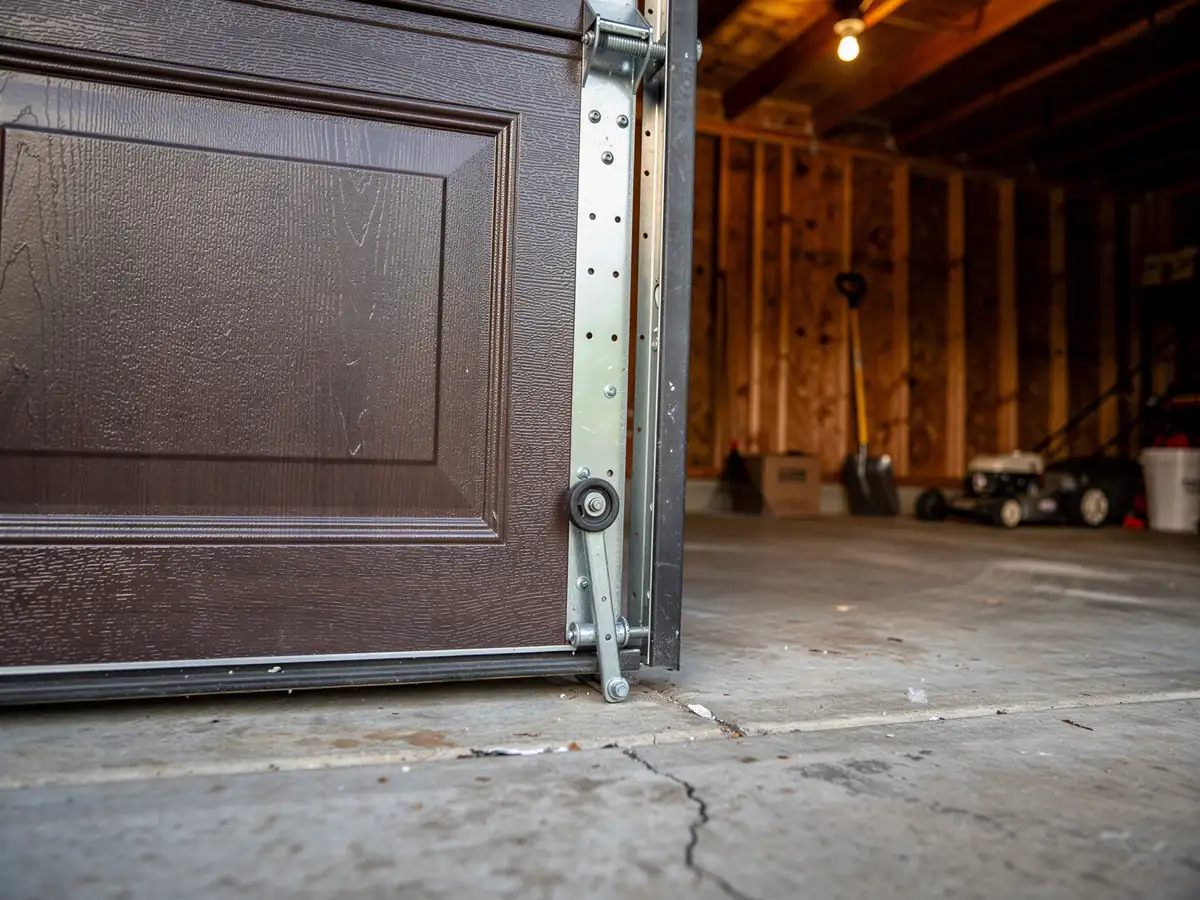
The common mistake is assuming a thicker-looking door is automatically a stiffer door. Panel thickness and wind resistance aren't the same thing - what actually keeps a wide door flat under pressure is the strut running across the panel and how well the track is anchored to the jamb. A homeowner in an older section of town with a narrower single door rarely has to think about this. A homeowner with a wide double door from the later part of that 1938-2009 build range does, because the door is wider and the failure point is different. The second mistake is waiting for visible damage before calling. Bowing that looks minor from the driveway is often a strut that's already bent, and a bent strut doesn't go back to straight - it gets replaced. We don't recommend trying to bend one back into shape; it's a part swap, not a repair, and parts for some older door models take longer to source than the labor itself.
What Local Conditions Do
Cold-moderate conditions mean the hardware on a wide door goes through real temperature swings across a year, and metal contracts in the cold at the same time wind events put lateral pressure on the panel. That combination is harder on a wide door than a narrow one simply because there's more surface area for the wind to push against and more linear feet of track for cold to stiffen up. In a service area with 81,921 owner-occupied houses across roughly 145,790 households, we see a wide range of door ages and widths, and the wide ones from mid-to-later-era construction are the ones that show strut fatigue first. None of this means every wide door needs work. A door with a properly rated strut and a track bolted into solid framing handles wind fine for years. The point is that width changes what the door needs structurally, and the age of the house often tells you what it was originally built with.
Does my garage door need a wind-rated strut if it's a double-wide door?
Not every double-wide door was built with one, especially depending on when your house went up in the 1938-2009 range we see across this area. If your door bows visibly in wind, that's the sign to have the strut and track bracing checked rather than assuming the panel itself is failing.
Can a bowed garage door panel be straightened instead of replaced?
The panel itself sometimes can be, but the strut behind it usually can't - once it bends under wind load it's lost its stiffness. We'll look at both before recommending a fix, but a bent strut is almost always a replacement part, not a repair.
Why does a wide door seem to react more to wind than a single door?
Surface area. A 16-foot double-wide door catches close to twice the wind load of a single-car door in the same gust, which is why bracing that works fine on a narrow door isn't always enough on a wide one built the same year.
Ready to get your garage door sorted?
Tell us what it’s doing and where you are in Lake Forest - we’ll take it from there.