Why This Fails Locally
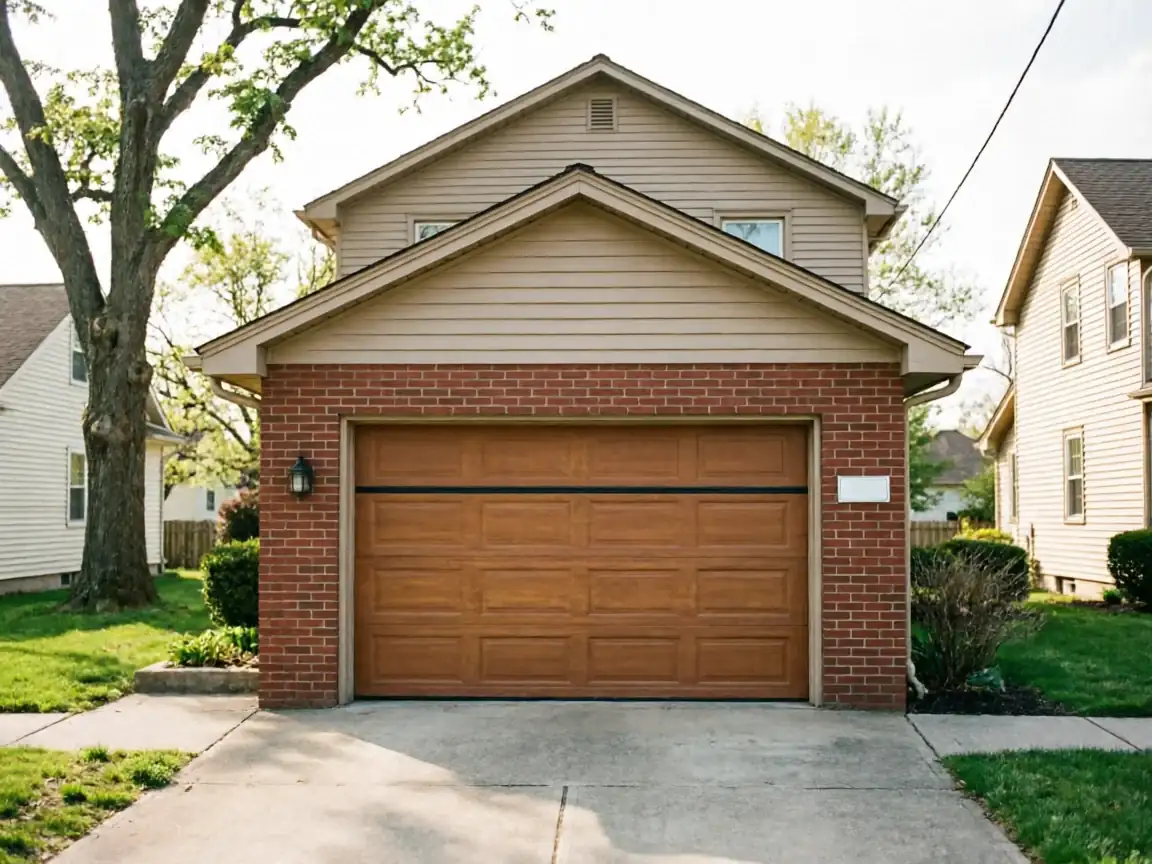
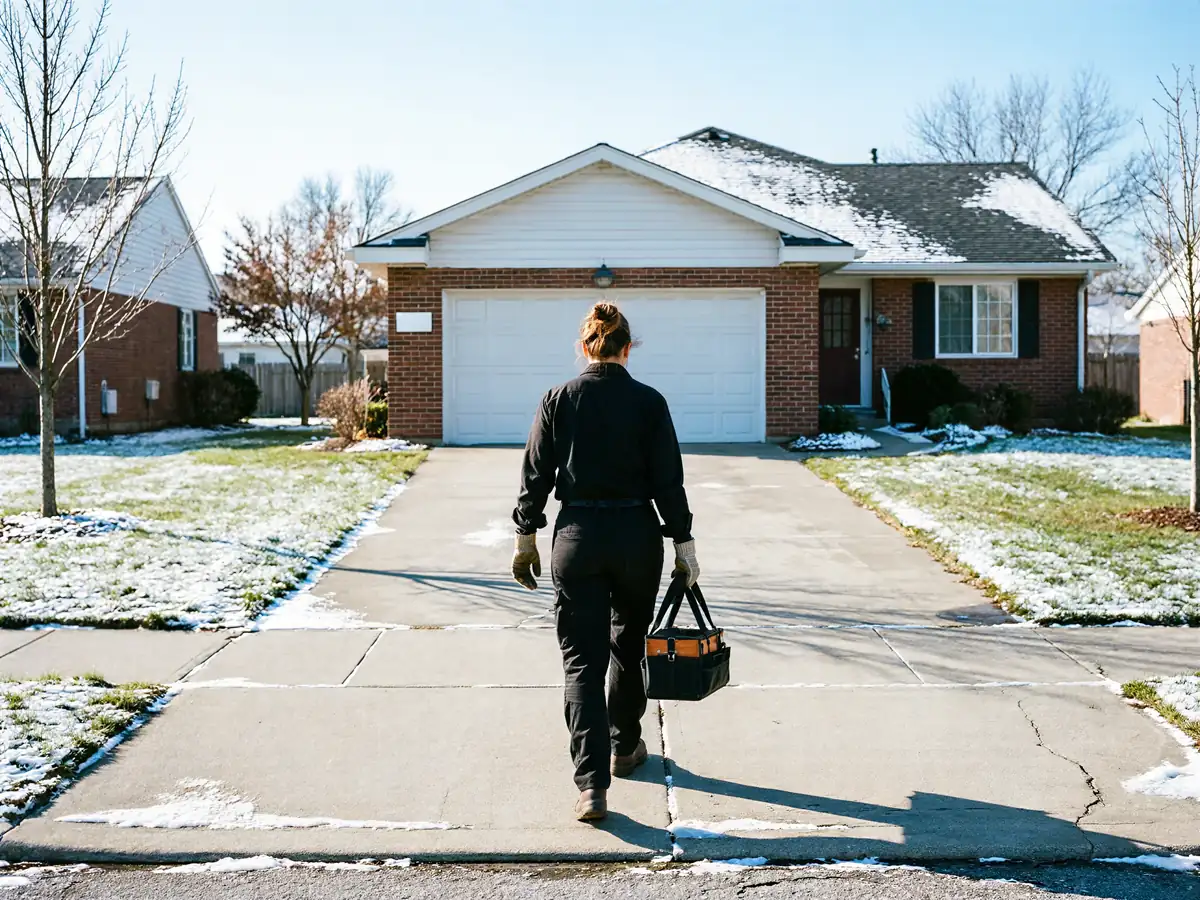
Housing across this part of the North Shore was mostly built between 1938 and 2009
With the median home dating to 1983, and most of the stock in Lake Forest and the surrounding 53 named communities going up in the 1980s and 90s. That matters for rollers because doors from that era were almost always built with steel rollers riding directly in steel tracks, with no sealed bearing and no nylon cushion. Thirty-plus years of that setup, run through a cold climate with real freeze-thaw swings, is what wears a roller down to a flat spot or a bent stem.
The cold is the other half of this
In a moderate-cold band like this one, grease in the roller stem stiffens up every winter, then gets pushed out and never fully redistributes once the weather warms. That cycle repeats every year the door sits unreplaced, and it's faster on steel-roller doors than on anything newer. Houses built later in that 1938-2009 range sometimes got nylon rollers from the factory, which age slower, but a lot of the stock in this income bracket never had an opener or roller upgrade done since it was installed. The failure mode is mechanical and it's tied directly to how old the roller is, not to how the door looks.
How It Shows Up
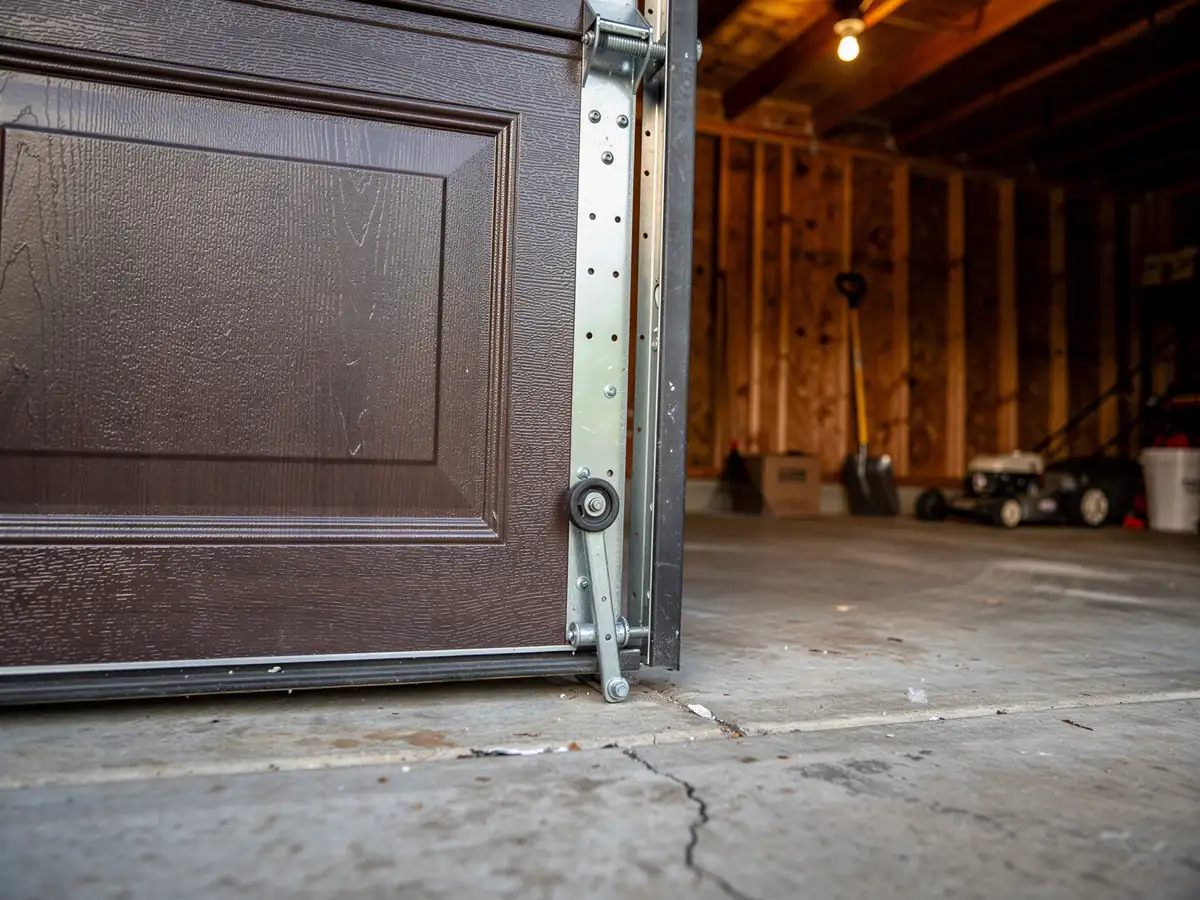
The first sign is usually noise - a grinding or scraping sound right as the door passes a certain spot in the track, which is the flat side of a worn roller hitting the rail. After that it's sticking: the door hesitates at the same point every time, sometimes hard enough that the opener strains or reverses. On steel-roller doors from the 1980s stock common here, you'll often see a groove worn into the track itself where the flat roller has been riding.
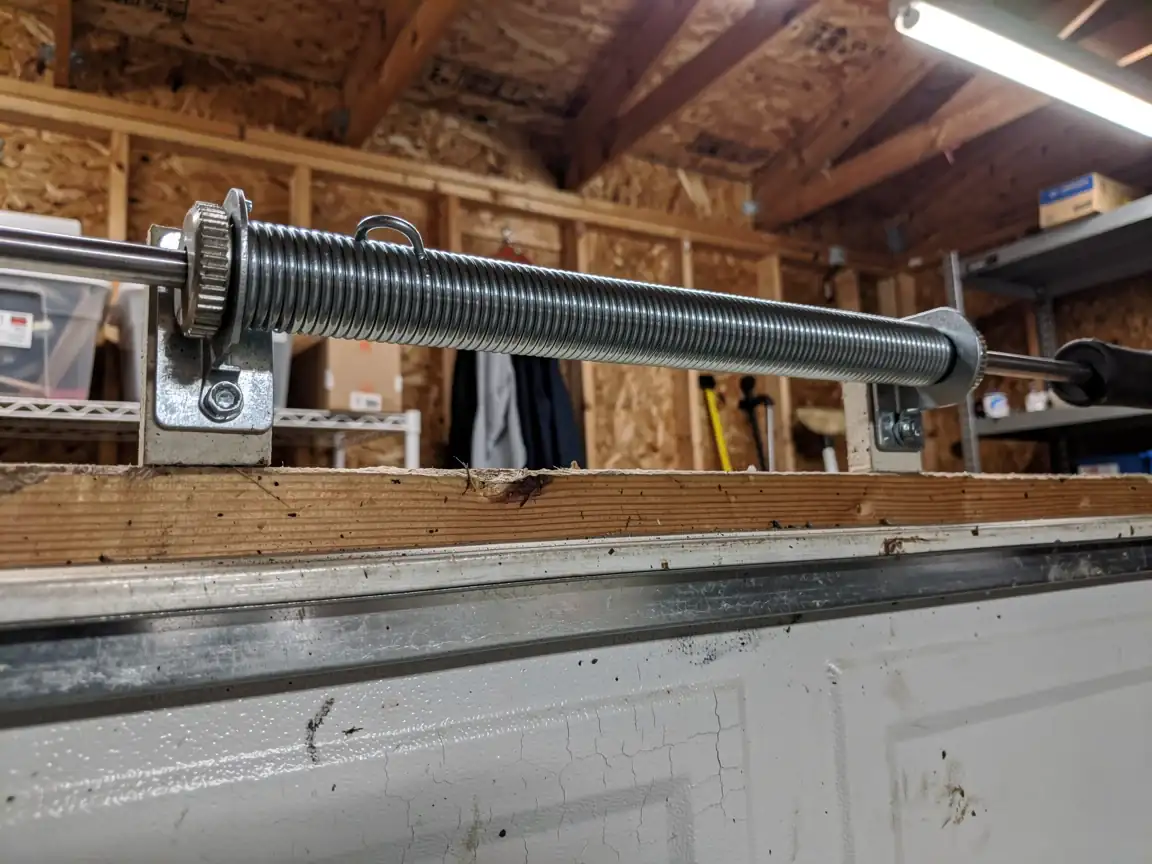
In winter, cold-stiffened grease makes all of this worse for the first few minutes of operation, then it loosens up once the door's been run a couple of times. Owners sometimes mistake that for a spring problem, since a stiff start can feel heavy. It isn't the same fix. A bad roller also throws vibration into the whole track assembly, which over time loosens the brackets holding the track to the frame - so a roller job that gets put off long enough turns into a track alignment job too.
How We Fix It
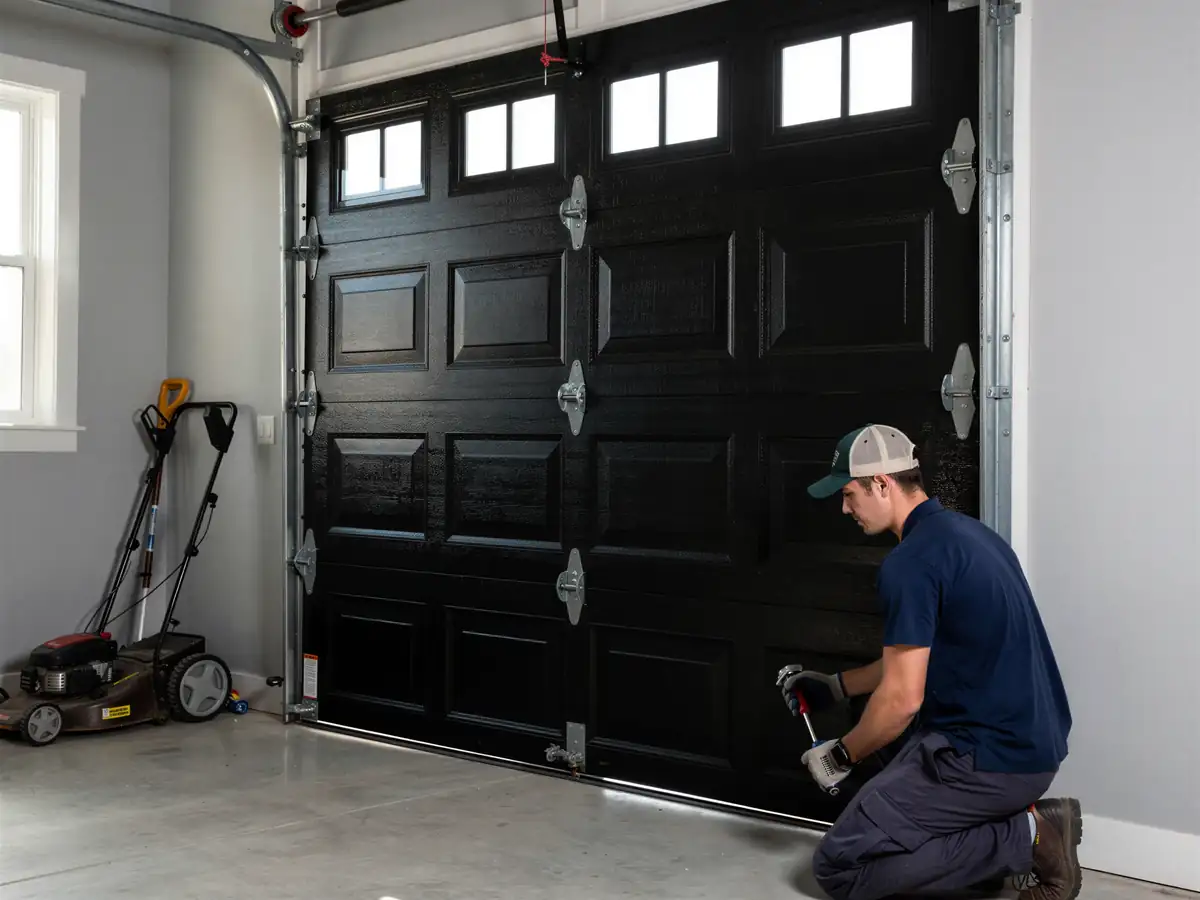
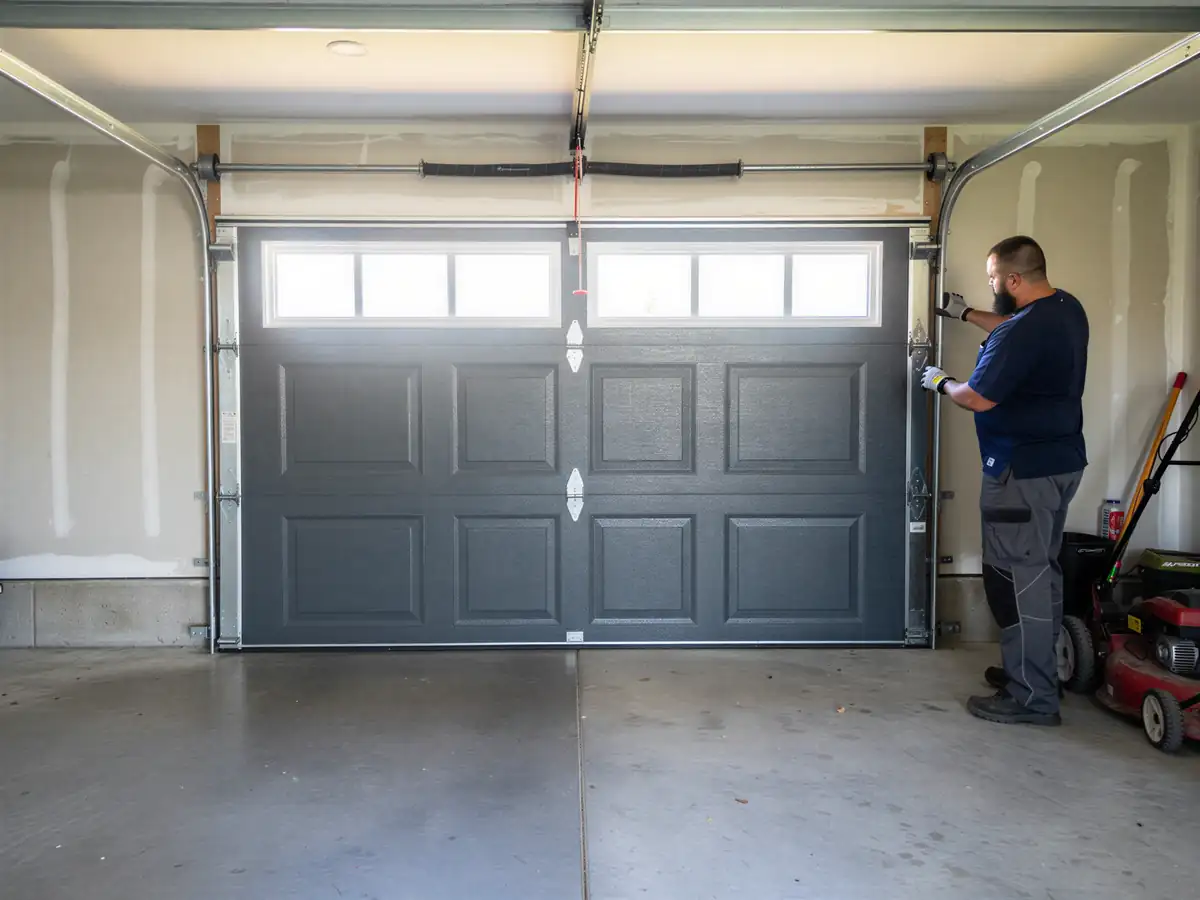
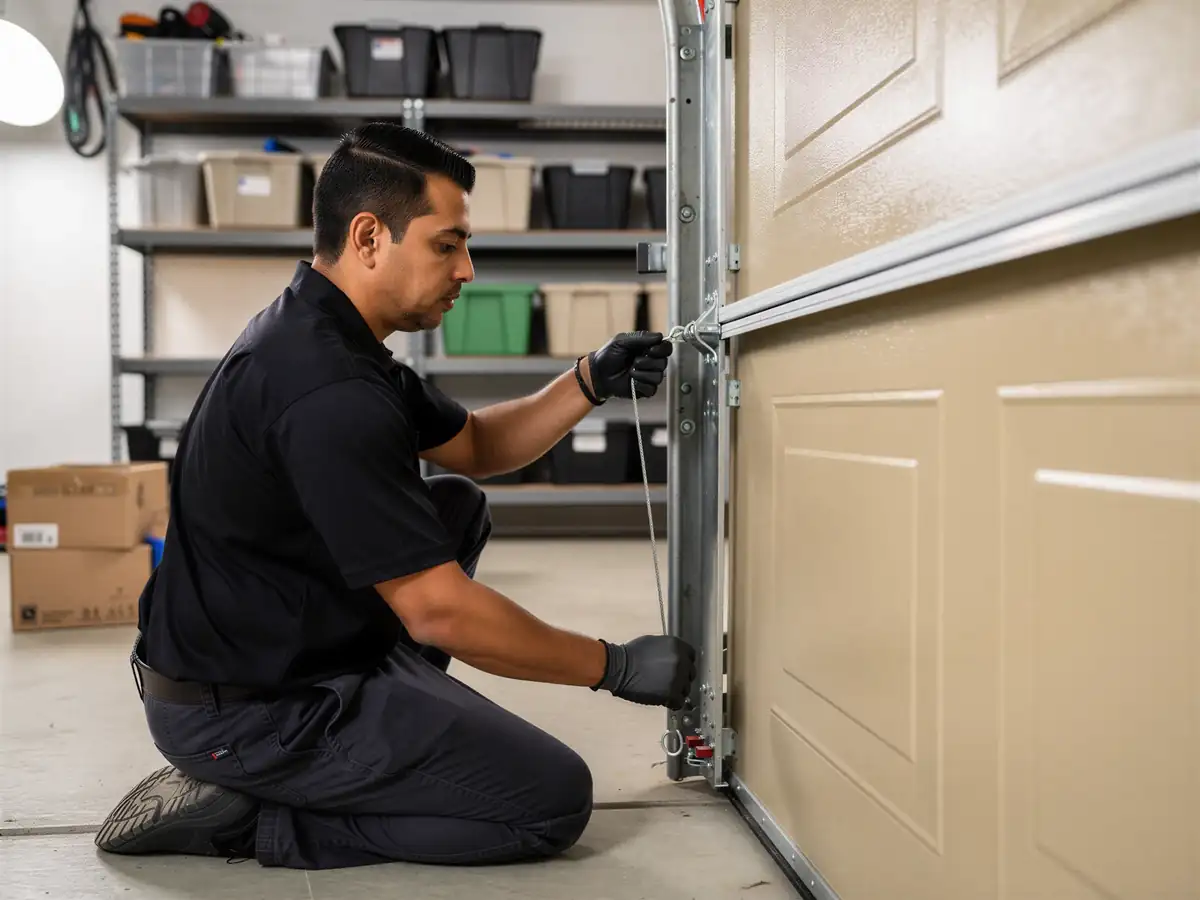
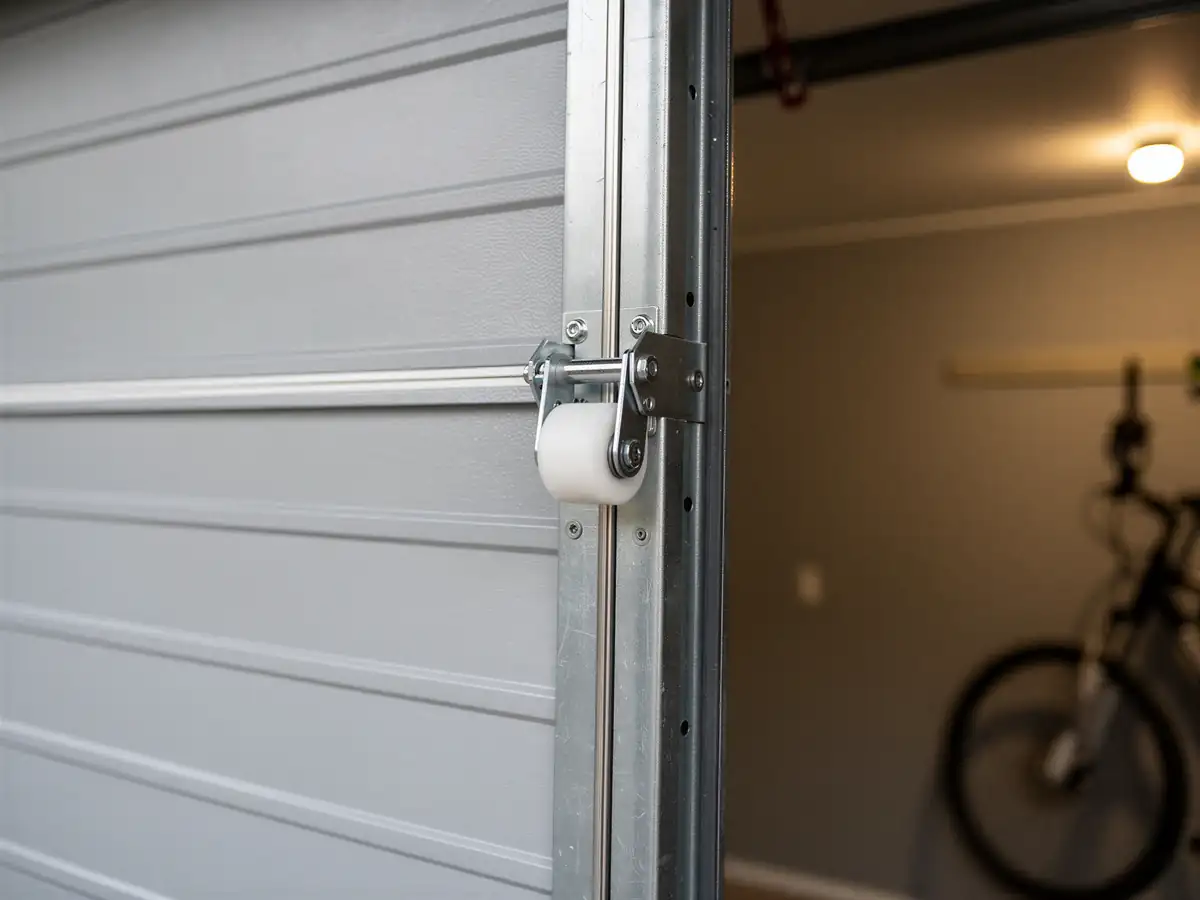
We pull the old rollers, check the stem and bearing on each one, and replace them with sealed nylon rollers rated for cold-weather service - quieter, and they don't wear a flat side the way steel does. If the track has a groove worn into it from a flat roller, we check the whole run for straightness before putting the new rollers in; a worn track can chew through a brand-new roller in a season if it's not corrected first.
We don't replace rollers one at a time on a double door. If one side is worn enough to need a job, the matched side is close behind it, and running mismatched rollers on the same door puts uneven load on the opener. Where we're limited: if the track itself is bent rather than just grooved, that's a track replacement, not a roller swap, and we'll tell you that up front rather than bolt new rollers into bad rail.