When Weather Seals Fail on a Lake Forest Garage Door
Lake Forest homes span 1938 to 2009, with most built in the 1980s-90s boom. Here's why seals fail in this cold moderate climate and what actually stops the draft.
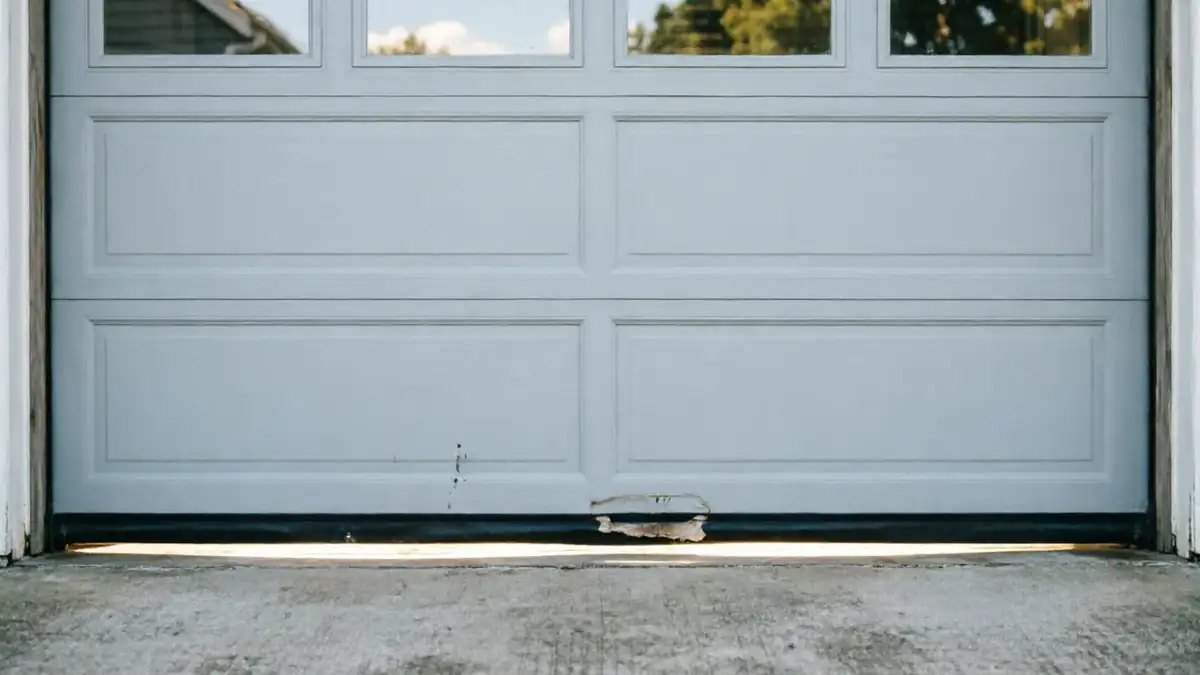
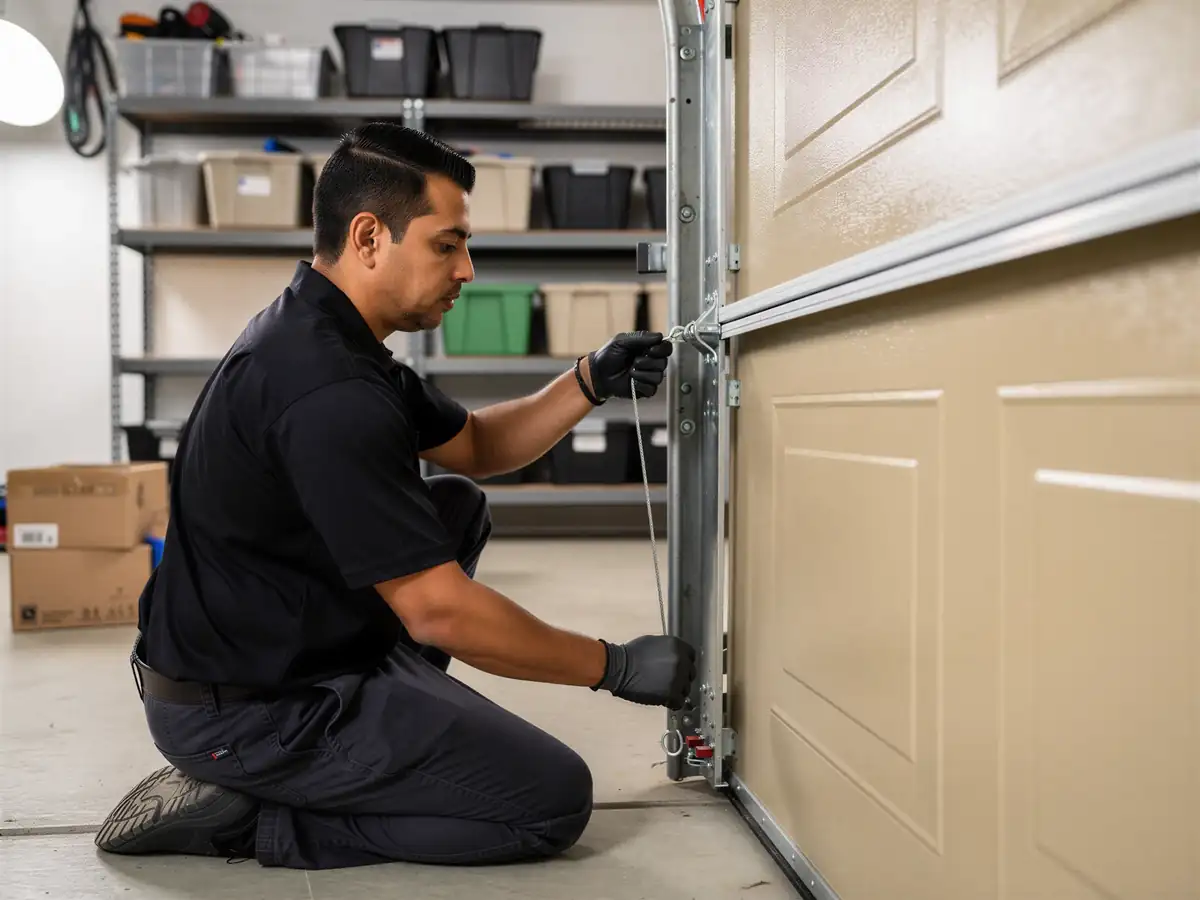
If you feel cold air moving across the garage floor near the door, or you can see daylight under the bottom edge, the seal has already given out. Don't wait for the gap to get wider. In a cold moderate climate band, a failed bottom seal doesn't just let in a draft - it lets in moisture that freezes against the slab and works its way under the threshold. If the garage backs onto a mudroom or laundry room, which is common in the 1980s-90s stock that makes up most of this service area, that cold air moves straight into living space. Call sooner rather than later if you notice frost forming on the inside of the door panel itself, or if the seal has pulled loose from its track rather than just gone flat. A seal that's pulled loose usually means the retainer channel has warped, and that's a different repair than swapping a strip of vinyl. We'll tell you straight if it's a five-minute fix or something that needs the track pulled.
The Situation
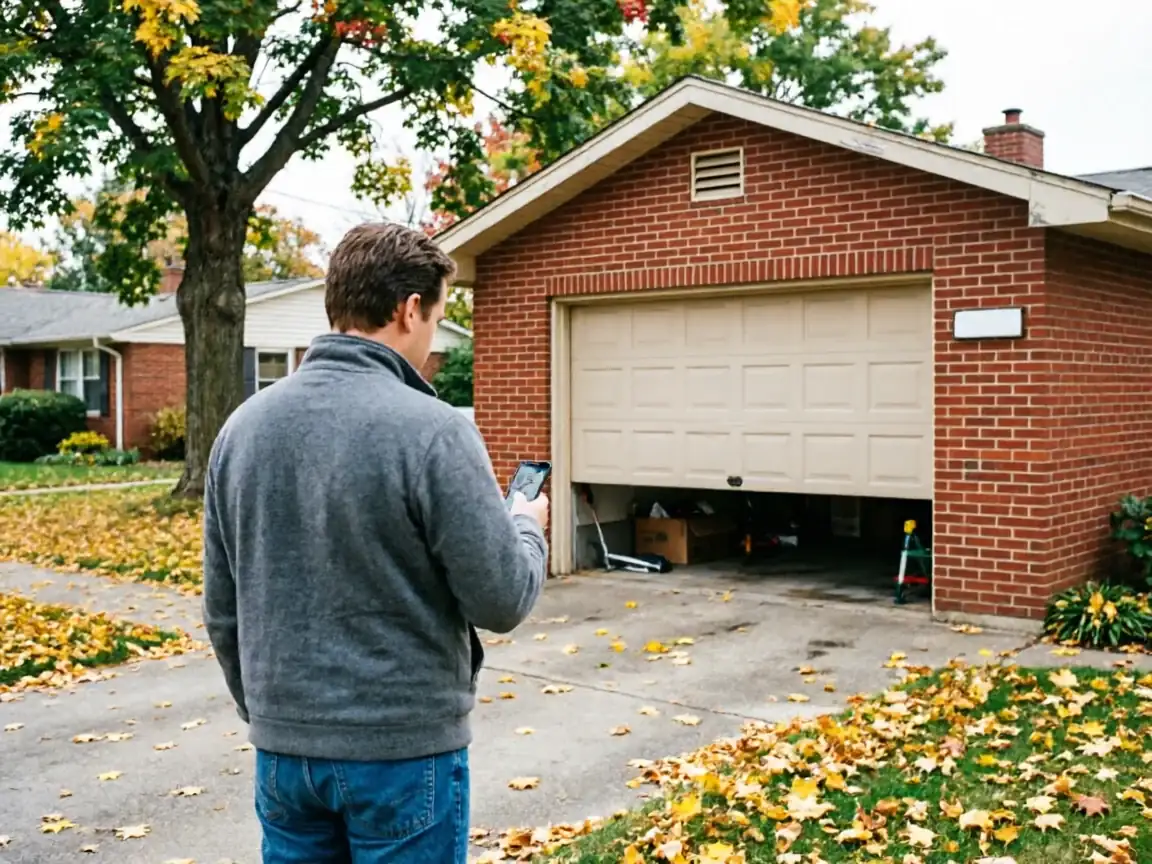
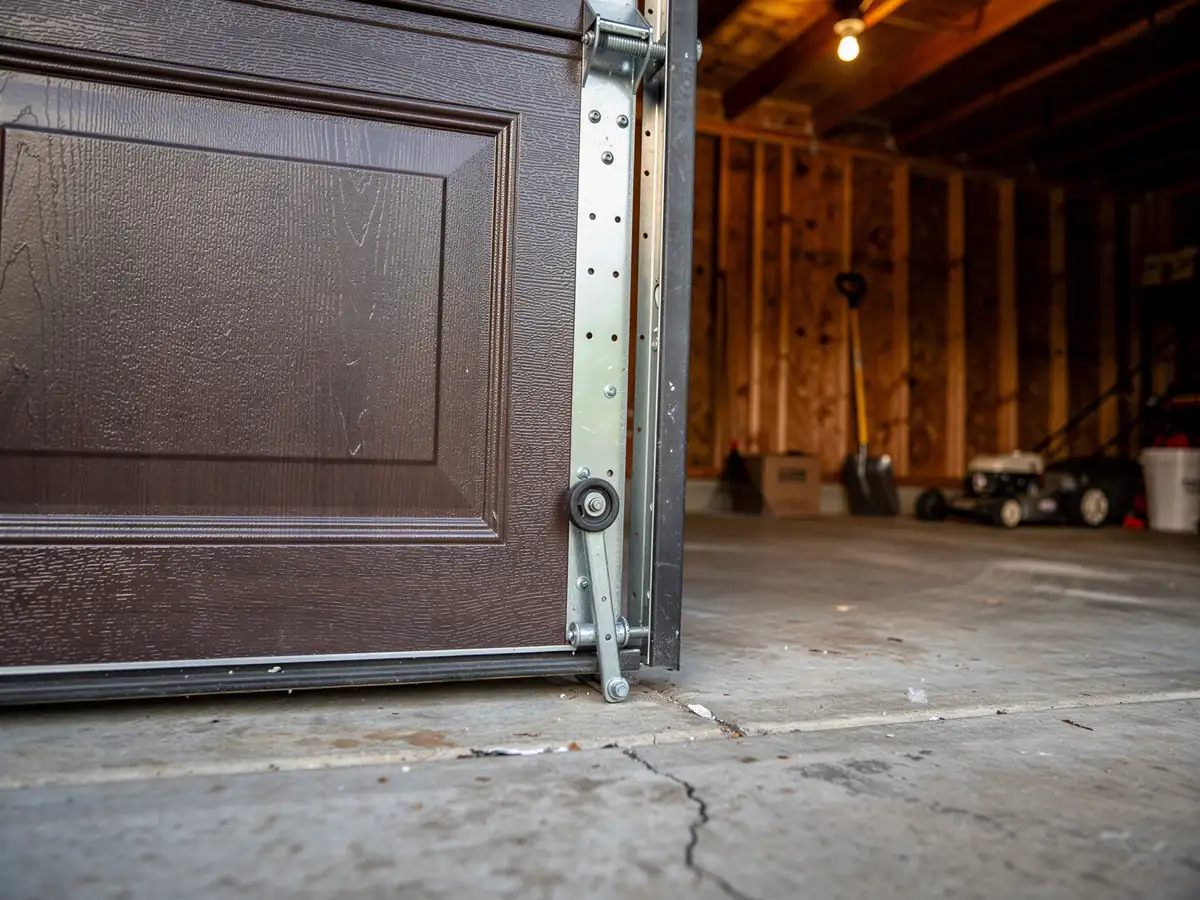
Housing in this service area was built between 1938 and 2009, with a median year of 1983, and most of it - across all 53 named areas we cover - went up during that 1980s and 90s run. That matters for seals because the doors from that era mostly use a flat vinyl strip pressed into a simple aluminum retainer, not the thicker bulb-style gasket that's standard on doors installed in the last ten or fifteen years. Houses from the earlier end of that range, closer to 1938 through the 1960s, sometimes still have the original wood jamb with no retainer track at all - just a strip nailed or stapled directly to the frame. That setup doesn't hold a modern seal kit without an adapter rail. So the first question on any seal call isn't the weather, it's which decade's track you're working with. Guessing wrong means buying the wrong kit twice.
What Most People Get Wrong
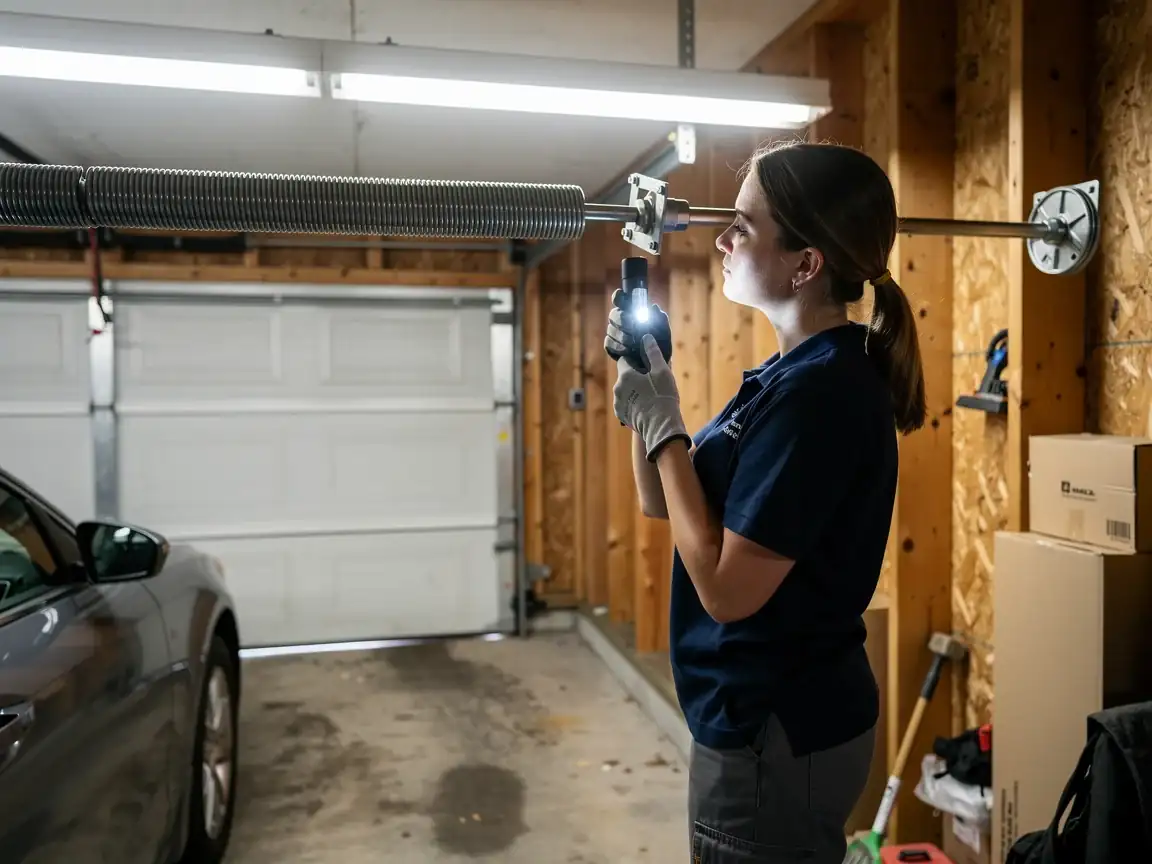
The common mistake is buying a universal weatherstrip kit from a hardware store and assuming it'll seat into whatever track is already there. On a lot of the older doors in this area - the ones from the 1960s through the early 1980s - the retainer channel is narrower than what current kits are sized for, so the new seal either won't seat fully or pops out within a season. The other mistake is treating every draft as a seal problem. If the door panel itself has a slight warp or the track is out of plumb by even a quarter inch, no amount of new weatherstripping closes that gap evenly - you'll get a tight seal on one side and a visible sliver of daylight on the other. We'll check the track alignment before we sell you a seal kit, because a straight track with the old seal sometimes drafts less than a crooked track with a brand new one.
What Local Conditions Do
In a cold moderate climate band, the freeze-thaw cycle is the real enemy of a garage door seal, not just the cold itself. Vinyl strips go rigid below freezing and lose their flex, so they stop compressing against the slab the way they do in October. Then, on the handful of days it climbs back above freezing, any water that got past the stiffened seal refreezes overnight and can pry the strip away from its retainer a little more each cycle. That's a slower failure than most owners expect - it's not one bad storm, it's a winter's worth of small cycles. It's also why a seal that looked fine in September can be cracked and gapping by February. One limitation worth saying plainly: if the slab itself has settled or heaved under the door opening, no seal fixes that - you're looking at a threshold strip or, in worse cases, concrete work, and that's outside what a seal replacement can solve.
How often should I replace the garage door bottom seal in Lake Forest?
There's no fixed schedule we can promise without seeing the door, but a flat vinyl seal typically shows cracking or flattening within a handful of winters once the freeze-thaw cycling gets to it. Check it each fall before the cold sets in - if it's stiff, cracked, or pulling out of the track, that's the sign, not a date on a calendar.
Why does my garage door seal fail faster than my neighbor's?
It often comes down to which era the house was built in. Homes from the earlier end of the 1938-2009 range here sometimes have older retainer tracks that don't hold modern seal kits as tightly, so the strip works loose sooner even under the same winter conditions as a newer house next door.
Can I just add foam tape instead of replacing the whole seal?
Foam tape can help on a door that's only slightly out of alignment, but it's a stopgap, not a fix. If the seal's cracked or the track is warped, taping over it just delays the job and usually looks worse within a season.
Ready to get your garage door sorted?
Tell us what it’s doing and where you are in Lake Forest - we’ll take it from there.