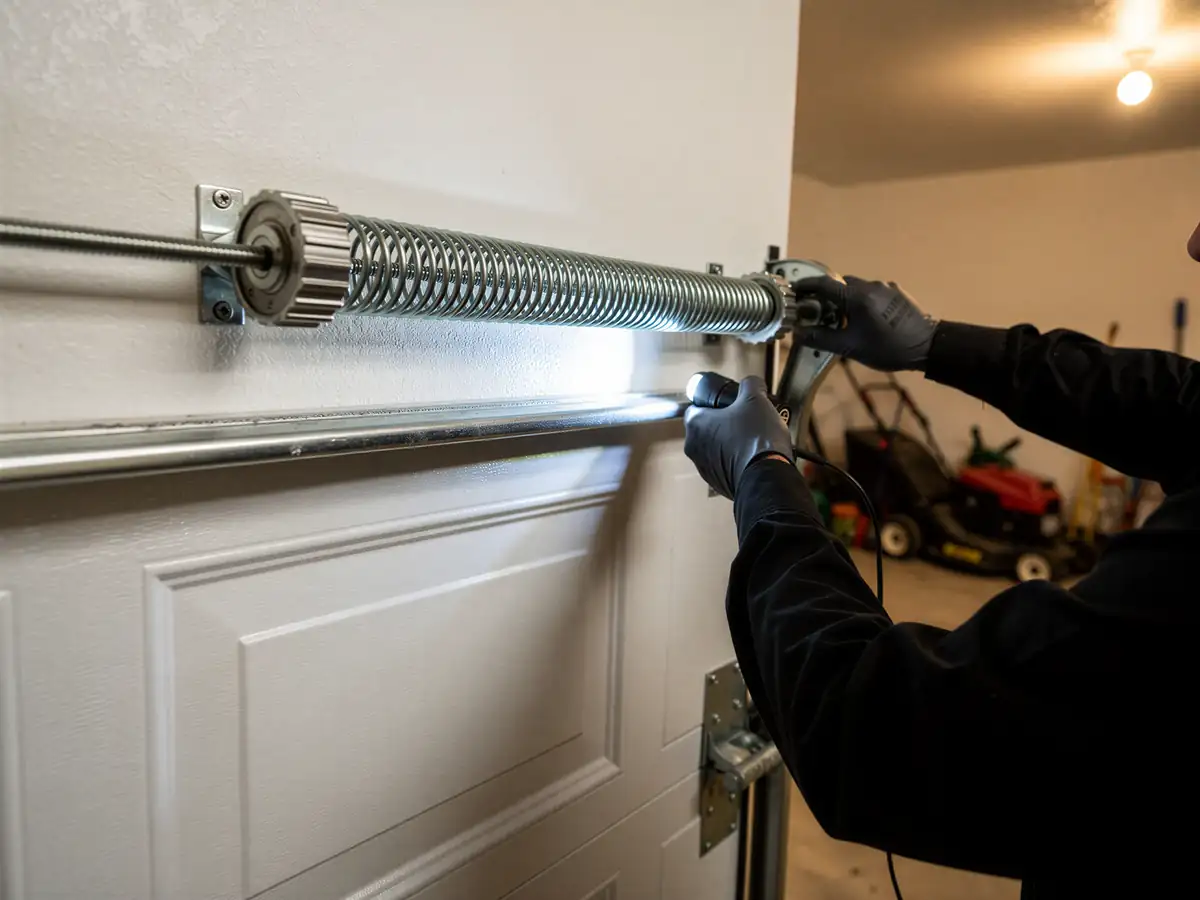
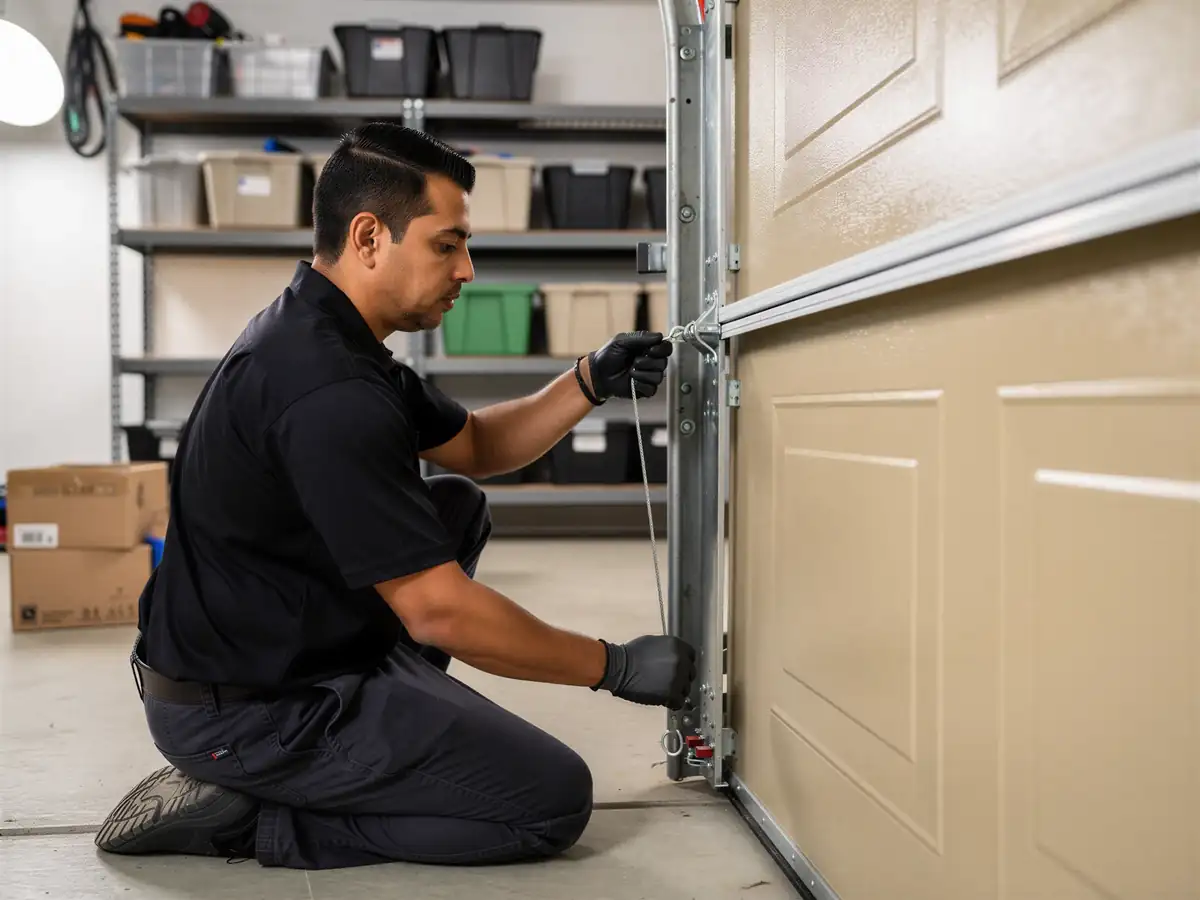
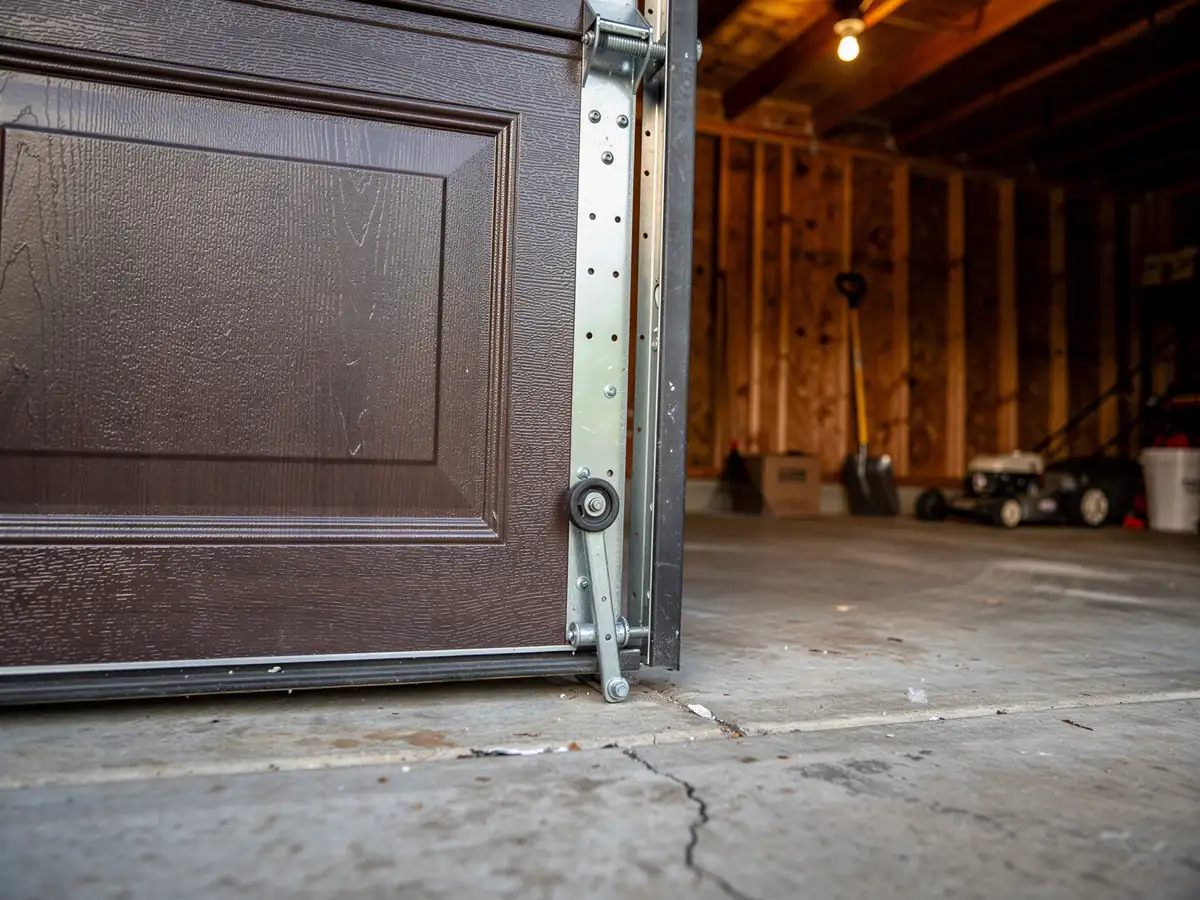
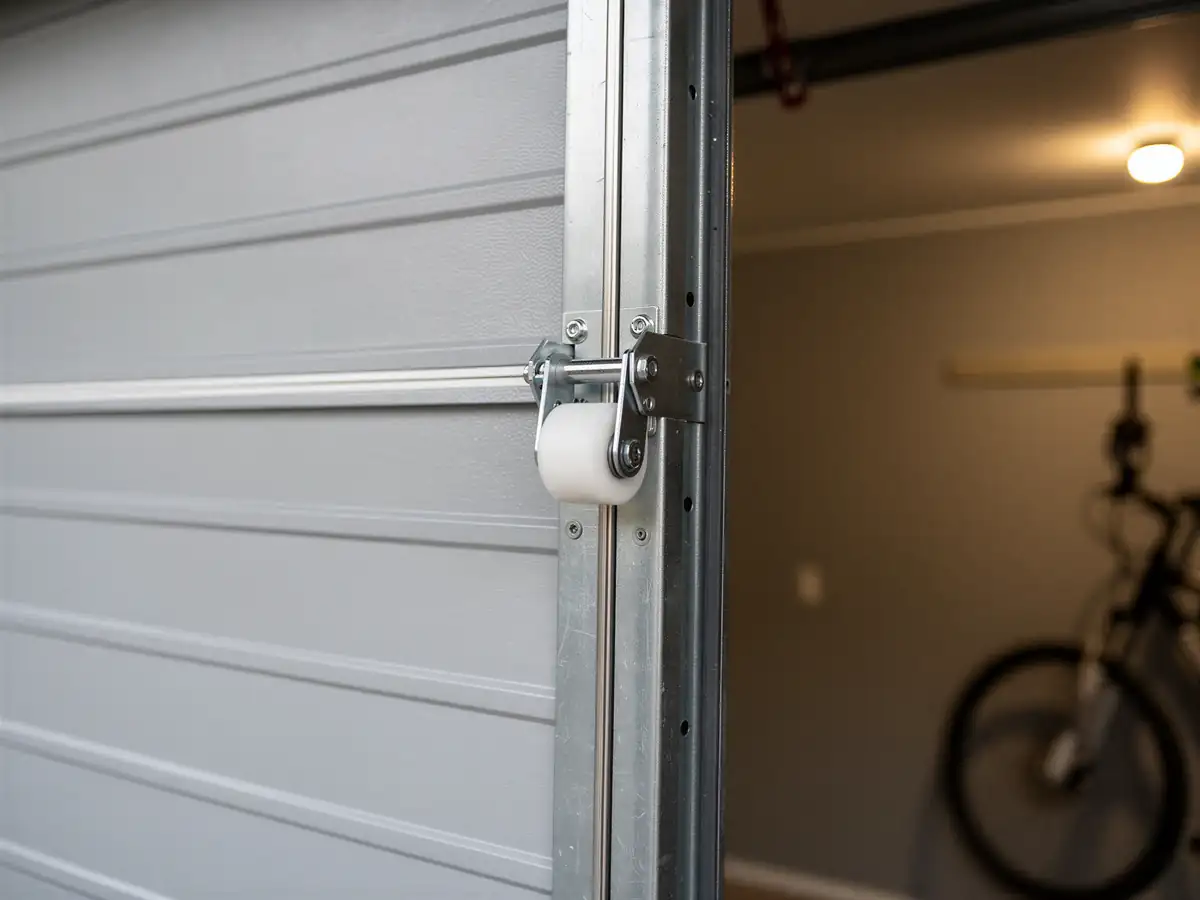
Lake Forest homes built mostly in the 1980s and 90s and the cold winters here both play a part in tracks working loose. Here's what we actually see on the job.
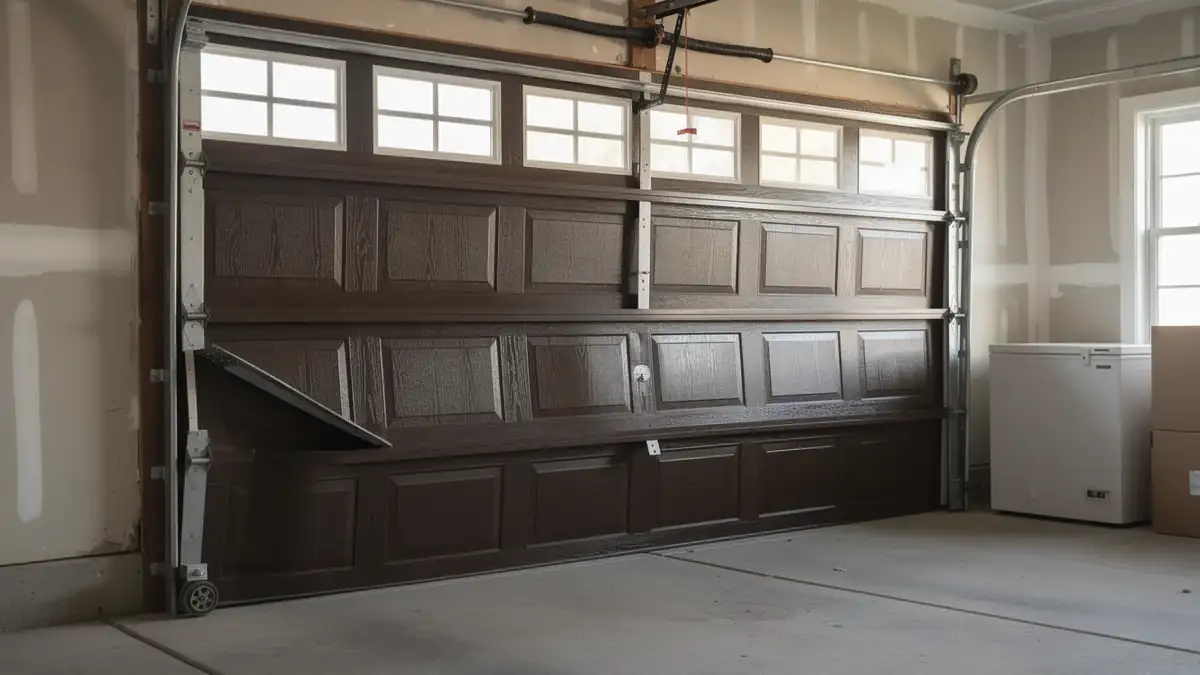
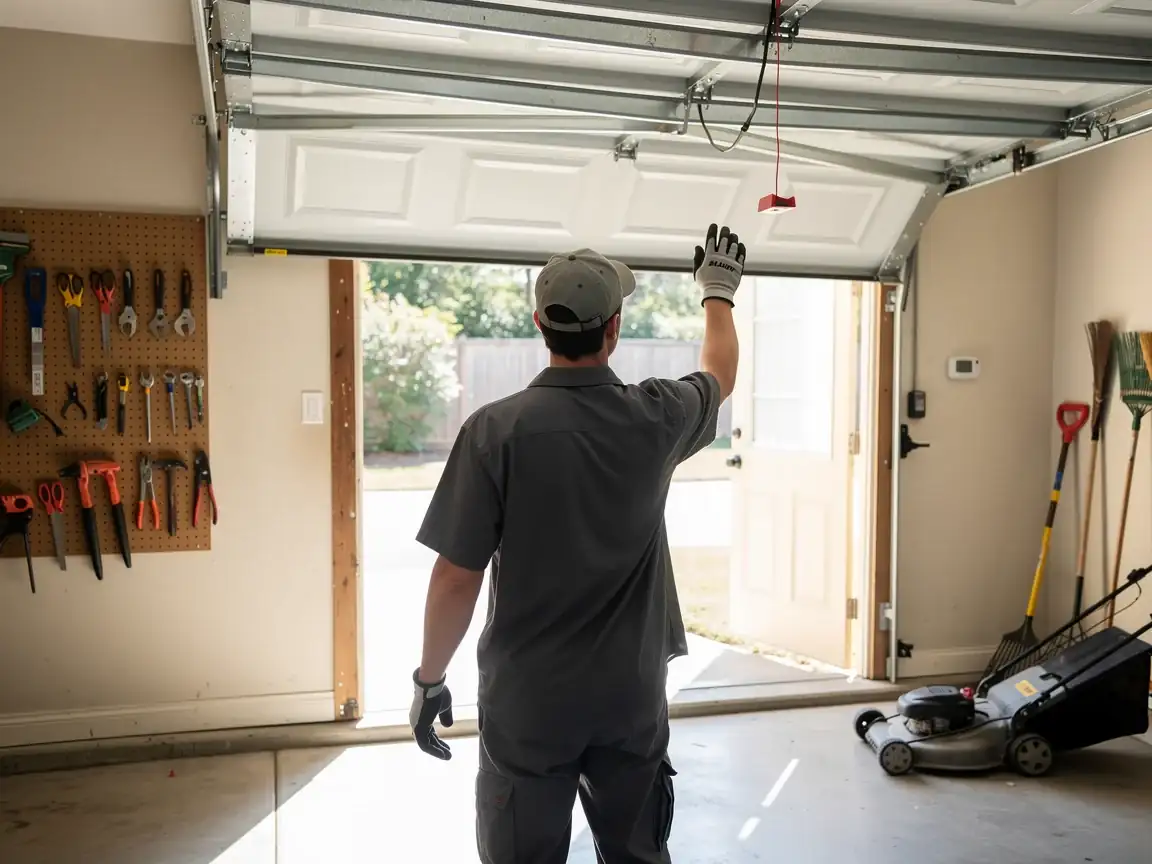
If the door is hanging crooked, binding hard on one side, or you hear a grinding scrape as it moves, stop running it. Call before the next cycle, not after. A door that's partway off its track can jump the roller completely on the next open or close, and at that point you're looking at bent track, not just loose track. Lake Forest sits in a cold moderate climate band, and a door that's already fighting a misaligned track works harder in freezing temps, which speeds up the failure. If the door won't move at all, or it's dropped at an angle, don't force it by hand or with the opener. That's a job for a service call, not a weekend fix. One honest limit here: if the track is bent rather than just loose or knocked out of alignment, straightening it rarely holds for long. Replacement track is usually the better call, and we'll tell you that straight instead of patching something that'll be back off within the year.
The Situation
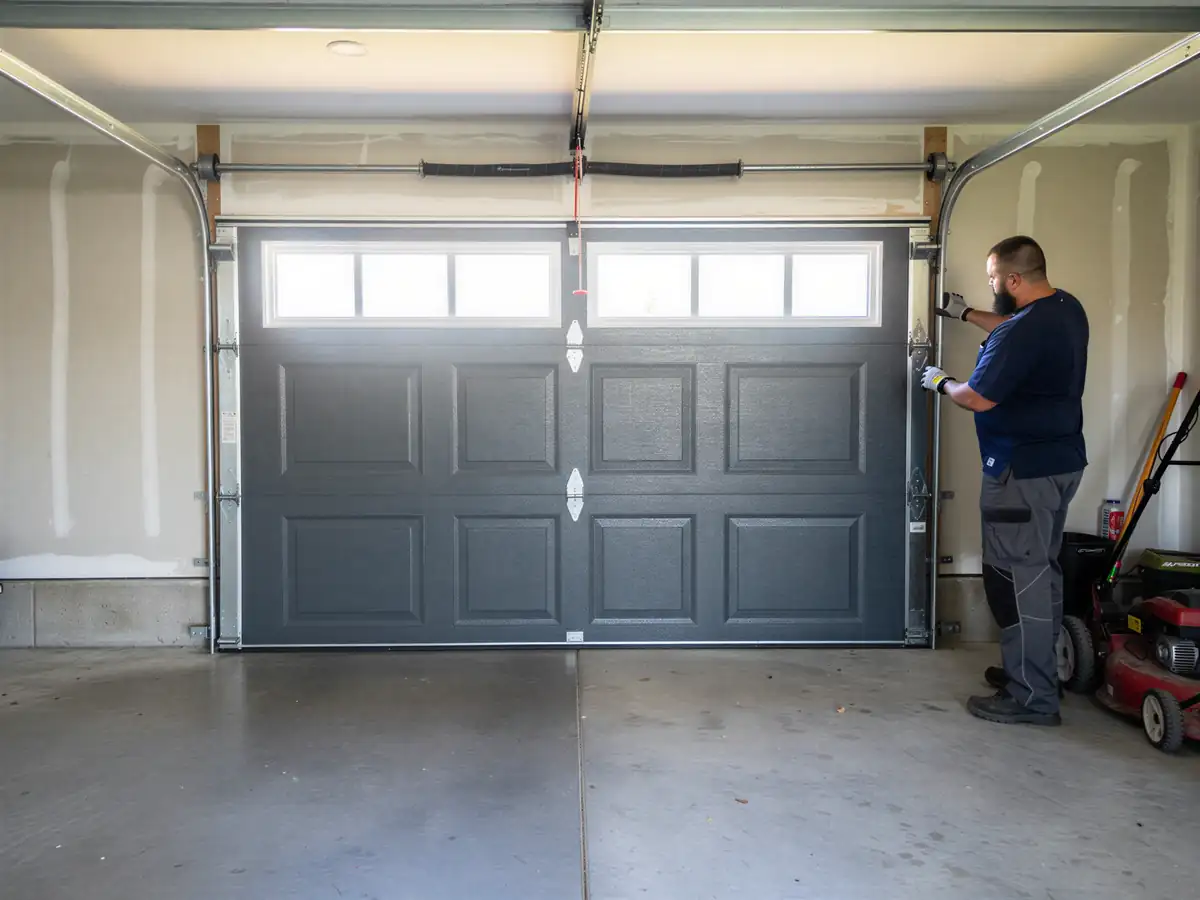
A lot of the housing stock in this service area went up between 1938 and 2009, with the median build year sitting around 1983, and most of what we work on across the named areas near Lake Forest is 1980s and 90s construction. That matters here specifically because track brackets from that era were fastened to jamb and header framing with hardware that's now 30 to 40 years old. Wood framing shrinks and shifts over decades, and the lag screws holding the track brackets to that framing back out a little at a time. You don't notice it happening. You notice it the day the door starts walking sideways on one side during the open cycle. Newer installs, closer to 2009, tend to use different bracket spacing and better fasteners, so the symptom shows up less on those. On a door install from the 80s or 90s, loose bracket hardware is one of the most common reasons we find a track pulling away from the frame.
What Most People Get Wrong
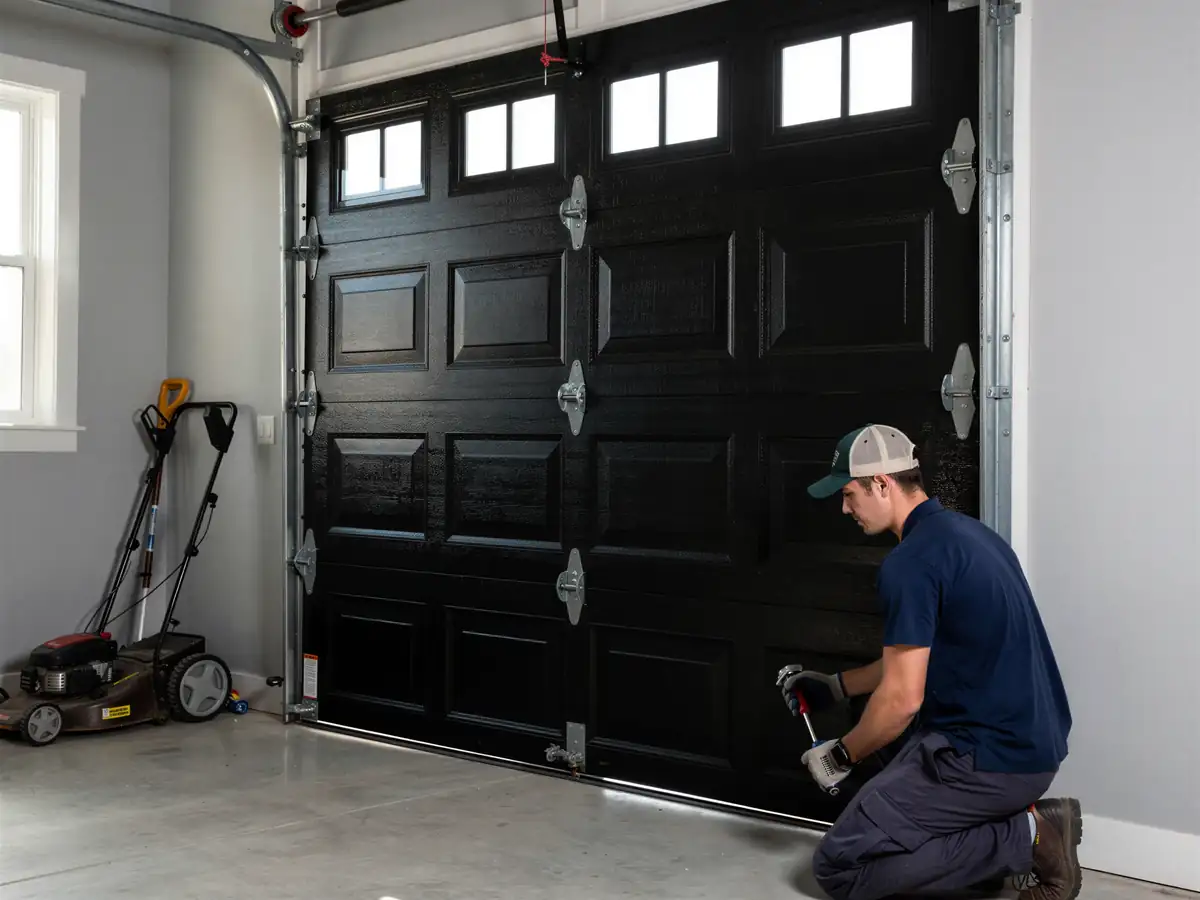
The usual mistake is treating a door that's rubbing or scraping as a lubrication problem. People spray the track, the noise quiets down for a week, and the actual cause - a bracket working loose, or a roller worn enough that it's riding the edge of the track instead of the channel - keeps getting worse underneath. Track alignment problems don't fix themselves with oil. The other thing we see: homeowners try to bend the track back into place with a pry bar or a 2x4. On an older, lighter-gauge track from a house built decades back, that metal doesn't flex and reset cleanly. It usually kinks worse, and now you've turned a bracket job into a full track replacement. If a panel gets struck - backed into or hit with something in the driveway - even a small dent at the roller line can throw the whole track alignment off, and that's not something a tightened bracket solves.
What Local Conditions Do
Cold moderate winters put a different kind of stress on an older track system than people expect. Metal contracts in the cold, and on a track mounted to framing that's already loosened over the years, that contraction is enough to open a small gap at the bracket that wasn't there in summer. Run the door through that gap enough times and the roller starts climbing the edge of the track instead of sitting in the channel - that's the moment a door goes visibly off track. It's also why we see more track calls here in the colder months than in July. None of this is unique to one house. It's a pattern tied to the age of the bracket hardware common across the 1980s and 90s stock in this area, paired with a climate that puts real temperature swings on that metal twice a year. A door that's been properly realigned and re-tightened handles that swing fine. One that's already got a quarter inch of play in the bracket won't.
How it works
From “it’s stuck” to “it’s fixed”
01
Tell us what’s wrong
Describe the symptom - won’t open, loud bang, opener runs but the door won’t move.
02
On-site diagnosis
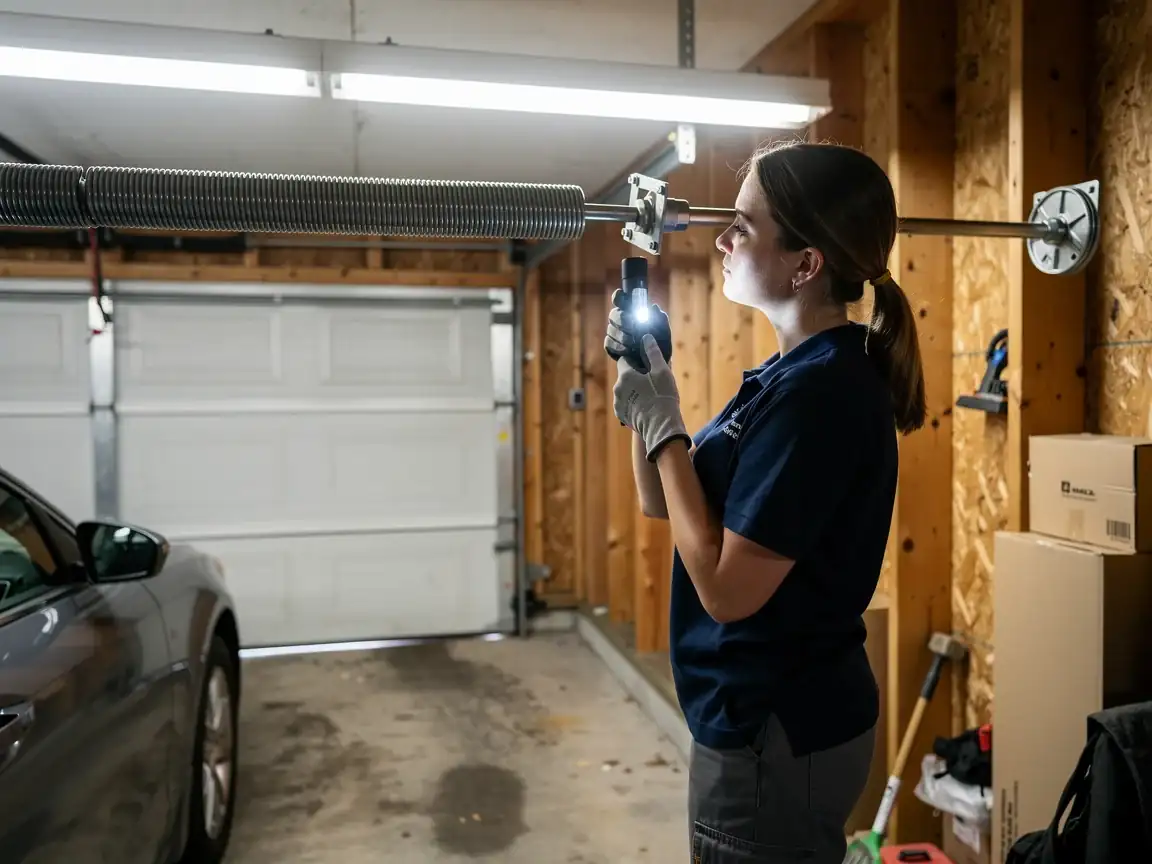
A technician tests the door under power and by hand and finds what actually failed.
03
Clear, up-front plan
You get the fix that’s needed and what drives the cost - before any work starts.
04
Repaired & tested
The repair is done, the door is set true and tested, and the work area left clean.
Not sure which repair your door needs in Lake Forest, IL? Describe what it’s doing - every job starts with a diagnosis.
My door looks fine but makes a grinding noise on one side - is that a track issue?
It can be. A grinding or scraping sound on one side, especially if it's new, often means a roller is riding against the edge of the track instead of inside the channel. That's usually caused by a bracket that's loosened at the frame. It's worth a look before the door fully jumps track.
Can I just tighten the track brackets myself?
You can check if they're loose, but tightening them without checking alignment first can lock the track in a position that's already slightly off, which makes the rubbing worse. If the bracket has pulled away from the framing, it usually needs to be reset and re-shimmed, not just cranked down.
Why does this seem to happen more in winter?
Cold causes the metal track to contract slightly, which opens up play at brackets that are already a little loose from age. On older bracket hardware that's common in homes built through the 80s and 90s here, that seasonal gap is often what finally lets a roller climb off the track.
Is a bent track ever worth straightening instead of replacing?
Sometimes, if the bend is minor and the track is a newer heavier gauge. On older, lighter track from an 80s or 90s install, straightening rarely holds. We'll tell you honestly which one you're looking at rather than charge for a fix that won't last.
Ready to get your garage door sorted?
Tell us what it’s doing and where you are in Lake Forest - we’ll take it from there.